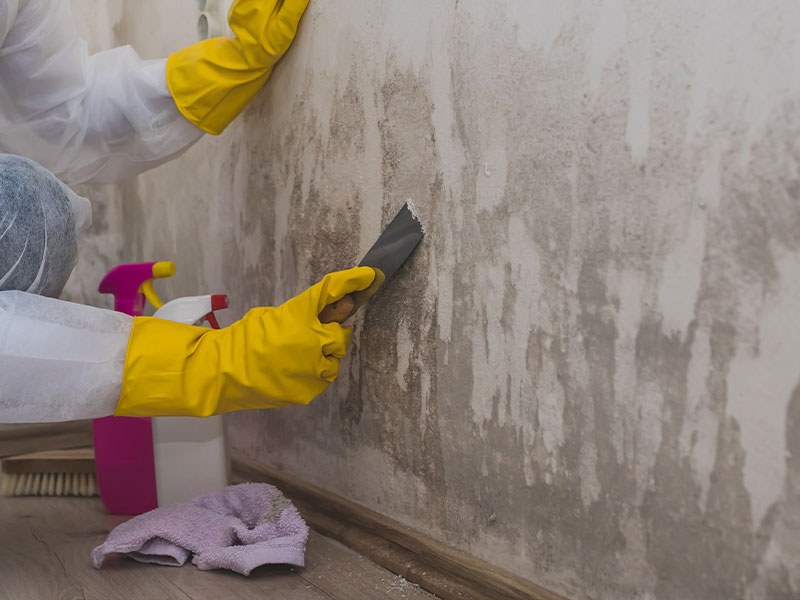
The storm has passed, the wind has settled, and now you have a different problem: water on the floor, damp drywall, a wet ceiling, or a musty smell that was not there before. Should you start setting up fans yourself, or is this the point when you need professional help?
If hurricane or storm water has entered walls, floors, ceilings, insulation, HVAC components, or multiple rooms, or if you have standing water, contaminated floodwater, electrical concerns, or cannot get the property thoroughly dry, you should call for professional water mitigation as soon as it is safe to do so.
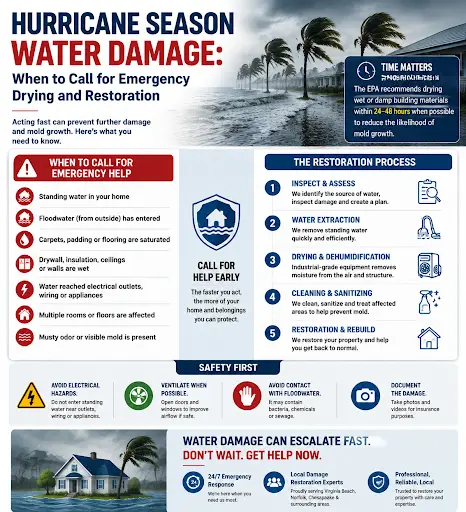
The U.S. Environmental Protection Agency recommends drying damp building materials within 24–48 hours when possible to reduce the likelihood of mold growth.
Here is how to recognize when a wet house has become a restoration emergency and what should happen next.
Table of Contents
Why Hurricane Water Damage Can Become Serious So Quickly
The official Atlantic hurricane season runs from June 1 through November 30, which means Hampton Roads homeowners spend months each year exposed to tropical-storm rainfall, wind, and coastal flooding risks.
The visible puddle is not always the biggest concern after a storm. Water can move beneath flooring, soak carpet padding, enter wall cavities, saturate insulation, and reach crawl spaces. The EPA specifically identifies hidden areas such as walls, ceilings, crawl spaces, and attics as places that may remain wet even when surfaces appear dry.
That is why hurricane season water damage restoration is not simply a matter of removing what you can see. Effective drying means identifying where moisture traveled and drying affected building materials before trapped moisture contributes to additional damage.
If you want more detail on the drying stage, ERS also explains how long it takes to dry out a flooded room.
When Should You Call for Emergency Water Removal Services?
Not every spilled bucket requires a restoration company. Hurricane damage is different because the amount, source, location, and duration of the water may be difficult for a homeowner to determine.
Here is a practical decision guide:
| Situation after the storm | Recommended response |
| Standing water remains inside | Call for emergency extraction |
| Outdoor flood or storm water entered the home | Professional assessment is strongly recommended |
| Carpet and padding are saturated | Extraction and moisture evaluation are needed |
| Hardwood/LVP is buckling, cupping, or lifting | Check for trapped moisture beneath flooring |
| Drywall, insulation, cabinets, or ceilings are wet | Assess hidden moisture and structural materials |
| Water reached outlets, wiring, or appliances | Do not enter or operate equipment until electrical hazards are addressed |
| Several rooms or floors are affected | Professional drying equipment is usually appropriate |
| The property stayed wet or closed for an extended period | Inspect for moisture and possible mold growth |
| A musty odor or visible mold has appeared | Moisture source and affected materials need evaluation |
Call Immediately When Floodwater Has Entered the Building
Water from a leaking supply line is very different from water that enters from streets, yards, storm drains, or overflowing waterways.
The CDC warns that homes affected by flooding can be contaminated by sewage and other hazards. Flood cleanup can therefore require more than simply pumping out water and drying carpet.
When outdoor floodwater enters living space, floodwater extraction should be approached as both a property-damage and safety issue.
Call When Water Has Reached Walls, Floors, or Hidden Cavities
A floor that feels dry on top can still have moisture underneath it. The same is true for baseboards, cabinets, drywall, insulation, and wall cavities.
Professional water mitigation services use extraction and drying equipment along with moisture evaluation to determine where water has migrated. ERS’s restoration process includes water extraction, content drying, and structural drying as dedicated stages of water-damage recovery.
Call When You Cannot Dry the Property Quickly
A household fan can move air, but it does not tell you whether insulation behind a wall, carpet padding, subflooring, or framing has reached an acceptable moisture level.
EPA guidance recommends acting quickly and notes that professional water-damage firms commonly use large fans, dehumidifiers, and specialized drying equipment to dry structures and contents.
That makes the EPA’s 24–48-hour drying window a useful benchmark, not a promise that mold will appear at hour 49, but a reason not to delay addressing wet building materials. EPA itself describes that timeframe as guidance rather than an absolute mold-growth deadline.
- QUICK FACT: A room can look dry before the building assembly is dry. Moisture behind drywall, below flooring, or inside insulation may require professional measurement and drying.
Safety Comes Before Storm Water Damage Restoration
Before touching damaged materials, confirm that entering the property is safe.
If standing water is near electrical equipment, outlets, wiring, or appliances, do not walk through the water to reach the electrical panel. CDC guidance says to have an electrician turn off the power when the main switch cannot be safely reached from a dry location. Wet electrical equipment should not be put back into service until it is completely dry and appropriately inspected.
If the structure appears unstable, you smell gas, or officials have restricted entry, remain outside and follow emergency-authority guidance.
This is one reason storm water damage restoration should start with a safety assessment rather than immediately carrying belongings or demolition tools into a flooded room.
What Professional Emergency Drying and Restoration Should Include
Once the property is safe to enter, an effective response generally follows a sequence rather than jumping immediately to repairs.
-
Locate and document the affected areas
The first step is identifying where water entered and how far it traveled. Photographing the damage before cleanup can also be valuable when an insurance claim is involved.
-
Remove standing and bulk water
Professional emergency water removal services focus first on removing as much water as possible. Faster extraction reduces the amount of moisture that must later be removed through evaporation and dehumidification.
-
Address materials that cannot be effectively restored
Floodwater-contaminated drywall and insulation may need to be removed rather than simply dried. The right decision depends on the water source, material, extent of damage, and condition of the building.
-
Clean, restore, and reconstruct
After drying, damaged finishes or structural materials may need repair or replacement. ERS offers water restoration together with reconstruction and content-restoration capabilities, allowing the recovery process to continue beyond extraction and drying.
-
Dry the structure, not just the surface
Air movers promote evaporation, while commercial dehumidification removes moisture from the air. The drying plan may need to address flooring systems, wall cavities, framing, crawl spaces, and other areas where stormwater traveled.
This is the difference between basic water damage cleanup services and a complete mitigation plan designed around the structure itself.
Can You Handle Hurricane Water Damage Yourself?
For a very small amount of clean water confined to a hard, nonporous surface, a homeowner may be able to clean and dry the area.
The decision changes when you are dealing with floodwater, widespread saturation, wet drywall or insulation, contaminated materials, electrical exposure, hidden moisture, or a property that cannot be dried promptly.
Homeowner discussions after hurricanes repeatedly raise the same problems: uncertainty about moisture beneath flooring, how much drywall needs attention, whether household dehumidifiers are sufficient, and whether a seemingly dry room is actually dry.
Why Local Response Matters in Hampton Roads
Virginia Beach homeowners can experience both rainfall flooding and water pushed inland by tides or wind. The City recommends residents understand how their property drains and document flooding with photos, dates, times, and water depth when flooding occurs.
ERS provides 24/7 emergency water-damage response. Its water-damage offerings include extraction, structural drying, content drying, inspections, and restoration, while its broader capabilities include reconstruction and content restoration.
For homeowners facing substantial storm damage, having those services coordinated can simplify the transition from emergency mitigation to rebuilding.
Key Takeaways
- Photograph storm damage before cleanup when it is safe to do so, particularly if you expect to file an insurance claim.
- Standing water, outdoor floodwater, saturated building materials, hidden moisture, or electrical exposure are strong reasons to contact a professional.
- Never enter standing water to reach electrical equipment or a breaker panel.
- Floodwater extraction is only the first step. Proper mitigation may also involve moisture detection, material removal, content cleaning and handling, structural drying, and then reconstruction.
- Do not wait for visible mold before responding to hurricane water intrusion; EPA guidance recommends drying wet materials within 24–48 hours when possible.
Conclusion
After a hurricane, waiting to see whether water damage “dries on its own” can leave moisture where you cannot see it.
The safest approach is to look beyond the surface. Consider where the water came from, how much of the structure became wet, whether electrical systems were exposed, whether porous materials were saturated, and whether you can realistically get everything dry quickly.
If the answer is unclear, an inspection can help determine the extent of the loss before damaged areas become harder to restore.
For homeowners and businesses, Water Damage Restoration Services provides 24/7 response for water extraction, drying, mitigation, restoration, and related reconstruction services.
Hurricane Water Damage? Get Help Before Moisture Spreads
If storm or flood water has entered your home or business, do not wait for walls, floors, or ceilings to show more damage.
Call Emergency Restoration Services at 757-972-7711 for 24/7 emergency water-damage assistance. ERS can assist with water extraction, professional drying, mitigation, restoration, and reconstruction.
Frequently Asked Questions
1. Should I turn on my air conditioner to help dry the house after a hurricane?
Only if the electrical system is safe and the HVAC system itself was not contaminated by flooding. The CDC advises having a flood-affected HVAC system professionally checked and cleaned before turning it back on because operating a contaminated system can distribute mold through the building.
2. What should I photograph before hurricane cleanup begins?
When it is safe, photograph and video the interior and exterior damage, damaged belongings, affected structural materials, and visible water levels. FEMA recommends documenting damage before cleanup and retaining relevant records and receipts.
3. Can electronics, documents, or furniture be saved after water damage?
Some items may be candidates for specialized content restoration, depending on the water source and extent of exposure. Do not plug in wet electrical or electronic equipment simply to see whether it works; water-damaged electrical equipment should be evaluated before being returned to service.
4. What if the hurricane knocks out power and I cannot run dehumidifiers?
Prioritize safety and water removal while following local emergency instructions. If using a portable generator, CDC guidance says gasoline-powered generators should remain outdoors and at least 20 feet from doors, windows, and vents because of carbon monoxide risk. Professional restoration assistance may also be appropriate when normal drying cannot begin promptly.
5. What can I do before the next hurricane to reduce repeat water damage?
Start with drainage. Virginia Beach recommends directing downspouts away from foundations, keeping drainage paths clear, observing how water moves across the property, and documenting recurring flooding. The City’s Stormwater Extension Program can also help residents evaluate property-specific mitigation strategies.