The holidays are over. You’ve clambered into the attic to store all the decorations and knick-knacks away for another year. It smells mustier than you remember. You pull the cord for the light, and there it is: something is growing up here. It’s covering the rafters and the roof sheathing, and there’s even some stuff on the insulation. Where do you go from here?

What Is It?
Mold is a fungus that grows in the form of multicellular filaments called hyphae. There are many different species of mold, and only lab testing can confirm the particular type of mold in any given situation. Fortunately, the specific type of mold isn’t typically relevant to the fact that the mold needs to be removed or the method of removal. Mold inside a home, even in the attic, is a health hazard and needs to be properly remediated no matter the species.
Mold Causes and Mold Prevention
Mold in an attic, or anywhere else in the home for that matter, is caused by moisture. One of the most common causes of attic mold is improperly vented exhaust fans from bathrooms, kitchens, and clothes dryers. Exhaust fans should always be vented to the exterior of the house. These fans push warm, moist air out of the vents creating a perfect environment for mold to grow. So, why do people often find mold in their attics during or just after the time of year when their heat is running? The answer is attic bypasses. These are air leaks that allow warm, moist air from the main house to get into the attic and can occur whether the heater is running nonstop or if it was just turned on to take the morning chill out of the air. These leaks can be easily found with an infrared camera, and traditional insulation is not enough to stop them because it doesn’t stop air movement. These leaks need to be covered with an air barrier such as foam insulation or caulk to seal them properly.
Mold Removal
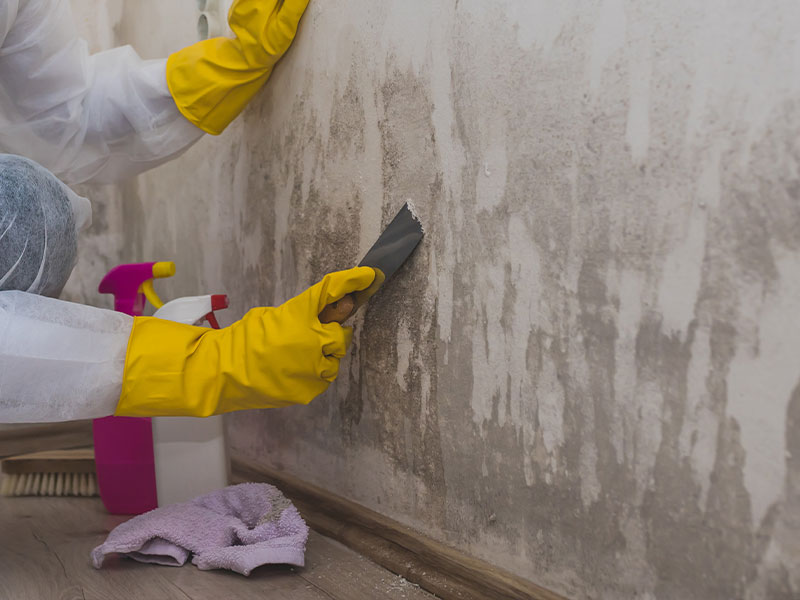
Although many people think that mold is no big deal and can be easily removed as a DIYer, it’s usually best to call in a professional for proper mold remediation. Mold can be finicky, and if not treated properly, will grow back often worse than before. The first step in professional remediation, or even if you’re going to try to handle it yourself, is to hire a mold inspector to discover the cause of the mold and the extent of the issue. Upon completing the inspection, most inspectors will recommend a reputable remediation company to take care of the mold removal.
The mold cleanup process usually starts with removing all water-damaged and mold-infested materials. The technician will then use specialized cleaning products to clean and disinfect any materials affected by the mold. It the damage is very extensive, they may remove drywall and clean or even remove the studs behind the drywall.
The final step is using HEPA filtration followed by replacing any materials that had to be removed and returning all cleaned belongings. If the damage is not severe, and you decide to try to clean it by yourself, remember that thoroughly scrubbing is the first step to removing the mold. Often, experts recommend scrubbing with a soft brush and a bleach solution. If this is the chosen method, be sure to rinse the area very thoroughly. Bleach left to dry on the surface will turn to sugar and feed the mold, causing it to return. A better idea would be to use a cleaner specifically formulated for mold removal.
It’s always a good rule of thumb to remember that excess moisture will almost inevitably cause a mold issue. Like anything, understanding the causes and seeking prevention is the best route to take. When prevention fails, it’s best to hire professionals to assess and remediate the damage.