Reviewed By: Chad Coerse, Co-Founder & Certified Mold Specialist
The washing machine is leaking! The dishwasher has overflowed! The icemaker is spewing water across the kitchen! Walking into your home or business to see water covering the floor can be a truly horrific experience, but it doesn’t have to be. Knowing what to do, what you can take care of yourself, and when to call a professional can ease your worries and help keep panic at bay.
Table of Contents
First Steps
- The very first thing that needs to be done is stop the flow of water. This usually means determining the source of the water and either turning off the source itself or cutting off the water flow at a nearby shutoff valve or at the water main. At this point, unless you’re a very good handyman, a plumber needs to be called. Mitigation can’t begin until the water has been stopped.
- There are a few things that can be done immediately to lessen the damage to the structure. The first is extract as much water as possible as quickly as possible. The faster the standing water is removed, the less time it has to cause damage. Extraction can be done any number of ways, including using towels, shop vacs, and carpet cleaners. The next step is remove as much content as possible from the affected area. This includes furniture, knick-knacks, and anything else that’s not attached or nailed down. After extracting the water and clearing the area, it can be helpful to set fans if they’re available.
Professional Help
- With any kind of water damage, it’s important to call an IICRC certified professional to come in and scope the loss right away. Water is tricky. Because it’s not possible to see inside wall cavities and under layers of floor, it’s necessary to have a professional take a look and properly assess the damage.
- At this point, the restoration professional will ask a series of questions to get an idea of the loss. This will include finding out if the source of the water has been determined and fixed or turned off, what you’ve done to start cleaning up, what type of materials have been affected, how far the water traveled, what type of foundation you have, and how much content there is.
- An appointment will be scheduled for a project manager or certified technician to do an initial scope to assess the damage to the property. They will be able to work directly with you or with your insurance company to come up with a solution and plan of action to restore the property to its pre-loss state.
Frequent Concerns
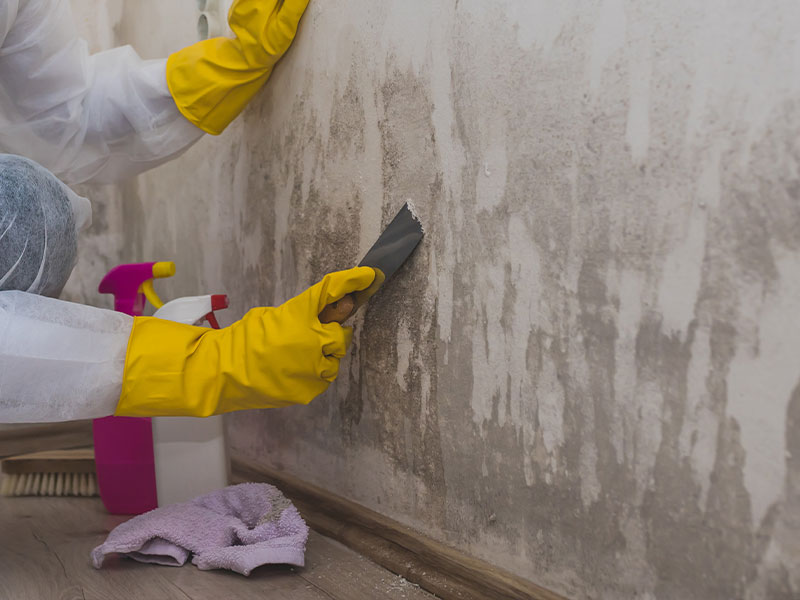
- Mold: With perfect conditions, it takes 24-48 hours for mold to begin growing and 72 hours for it to colonize. This means that as long as professional mitigation starts within 24 hours of the loss, mold growth can be prevented. Going past those 24 hours does not guarantee you will experience mold growth, but it does increase the risk. Setting personal fans to begin the drying process can also be helpful in preventing mold growth because mold needs stagnant moisture to grow.
- Time Frame: It typically takes 3-5 days to complete the drying process depending on the materials that were wet. The entire job, including drying, demo, and cleaning usually takes 5-7 days to complete. Bear in mind that this does not include the time it will take to put everything back. Staying in the home while mitigation takes place is largely dependent on the size and type of loss. Most insurance companies consider a home to be “habitable” if there is access to a kitchen and a bathroom, although it’s necessary to check your policy for specifics.
- Pets: It’s best to keep all pets away during mitigation because the air is so hot and dry. Fish tanks and exotic pets such as birds and reptiles must be removed to unaffected areas of the home or removed from the home completely if there are no unaffected areas.
Experiencing a water damage in your home or business can be stressful and scary. Being confident that you know the appropriate actions to take to reduce the extent of the damage is the first step to easing your mind.