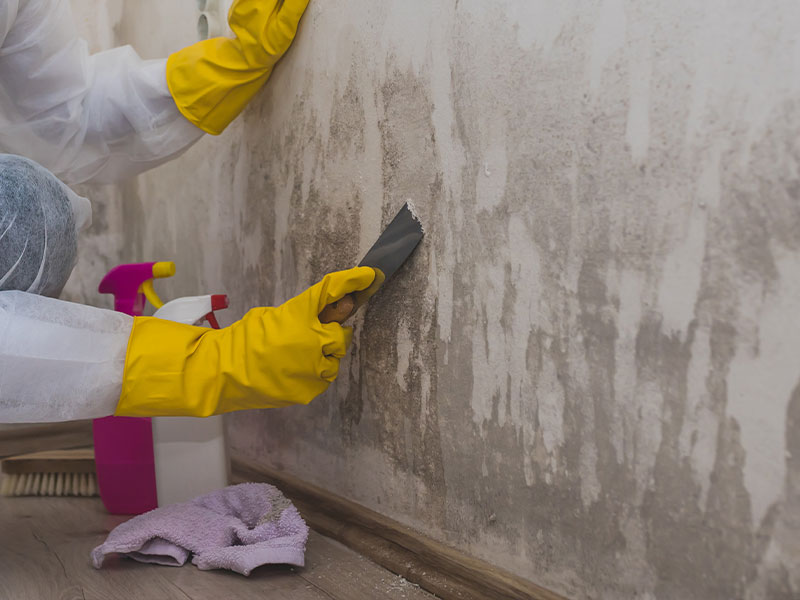
Have you noticed water spilling over your gutters during a rainstorm or a mysterious stain appearing on an interior wall? What looks like a minor drainage problem could be an early warning of moisture entering your home’s structure.
For homeowners in Virginia Beach, clogged gutters and water damage are issues worth taking seriously, especially during periods of heavy rainfall and seasonal leaf buildup. When gutters cannot carry rainwater away from the roof, overflowing water may reach siding, window openings, wall cavities, and foundations.
Over time, repeated moisture exposure can damage drywall, insulation, and wooden framing. The challenge is that much of this damage can remain hidden until visible deterioration appears.
Understanding how clogged gutters cause hidden water damage can help Virginia Beach homeowners recognize warning signs before the problem becomes more extensive. When moisture reaches drywall, insulation, or wooden framing, professional water damage restoration services may be needed to assess affected areas, remove excess moisture, and prevent further deterioration.
Table of Contents
How Do Clogged Gutters Cause Water Damage to Walls?
Clogged gutters flood walls when leaves, debris, or blocked downspouts prevent rainwater from draining properly. Instead of flowing safely away from the house, water spills over gutter edges and may enter vulnerable exterior openings.
A properly functioning gutter system collects roof runoff and directs it through downspouts toward a suitable drainage area.
When this system becomes blocked, several problems can develop.
1. Water Overflows Behind or Over the Gutter
Leaves, twigs, and accumulated debris restrict water flow. During rainfall, water may spill over the front edge or flow behind a poorly attached gutter.
Repeated wetting can damage fascia boards, soffits, and nearby exterior materials. If flashing or other protective components are compromised, moisture may enter concealed spaces.
2. Rainwater Reaches Exterior Wall Openings
Siding is designed to shed water, but it is not necessarily a completely waterproof barrier. Overflowing gutters can direct concentrated water toward siding joints, window trim, door frames, and other vulnerable areas.
When protective flashing or the weather-resistant barrier is damaged, an exterior wall leak may develop.
3. Moisture Becomes Trapped Inside Wall Cavities
Once water passes the exterior protection system, it can reach wall sheathing, insulation, framing, and interior drywall.
Some materials absorb and retain moisture, making damage difficult to identify through a visual inspection alone.
4. Water Collects Around the Foundation
Blocked downspouts can also release large amounts of roof runoff near the base of a home.
If surrounding soil does not drain properly, water may accumulate near the foundation and enter crawl spaces or other vulnerable areas.
The EPA’s guide to mold and moisture prevention recommends maintaining gutters and ensuring that the ground slopes away from a building’s foundation.

Why Is Gutter Overflow a Concern for Virginia Beach Homes?
Virginia Beach homeowners experience coastal weather conditions that can include heavy rain, thunderstorms, and tropical systems.
These conditions can expose weaknesses in residential drainage systems, particularly when gutters are already filled with leaves or other debris.
The National Weather Service also monitors coastal flooding hazards in Virginia Beach and surrounding communities. However, coastal flooding and gutter overflow are different sources of water damage and should be evaluated separately.
For local homeowners, three conditions deserve particular attention.
1. Seasonal Debris and Fall Home Maintenance
Autumn leaves and storm debris can accumulate in gutters and downspouts. Without regular inspection, a blockage may go unnoticed until the next significant rainfall.
2. Wind-Driven Rain
Strong winds can push rain toward exterior walls, windows, and roof intersections. When combined with gutter overflow, this can increase moisture exposure around vulnerable building components.
3. Poor Downspout Drainage
Downspouts that discharge directly beside a foundation can contribute to persistent moisture problems. Homeowners should check that runoff travels away from the structure without creating drainage problems on neighboring properties.
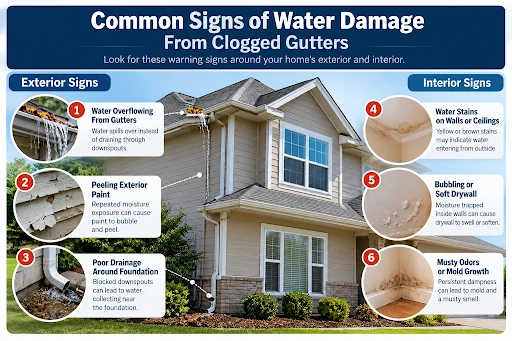
Warning Signs of Water Damage From Clogged Gutters
Not every overflowing gutter causes structural damage. However, recurring overflow combined with visible deterioration deserves investigation.
| Warning sign | What it may indicate |
| Water spilling over gutters | Blockage, improper slope, or inadequate drainage |
| Peeling exterior paint | Repeated moisture exposure |
| Brown or yellow interior wall stains | Possible water intrusion |
| Bubbling or soft drywall | Moisture absorbed into wall materials |
| Musty odors | Persistent dampness or possible microbial growth |
| Warped trim or baseboards | Moisture-related swelling |
| Soft or deteriorating fascia | Possible prolonged water exposure |
| Damp crawl space | Poor drainage or another moisture source |
These symptoms are not proof that gutters caused the damage. Roof leaks, plumbing problems, failed window flashing, and condensation can produce similar signs.
If you notice recurring stains or unexplained dampness, a professional moisture inspection can help identify the actual source.
For more information, read our related article: What Does Water Damage Do to Your Home?.
Can Clogged Gutters Cause Structural Damage?
Yes. Repeated water intrusion from clogged gutters can contribute to structural deterioration when moisture reaches load-bearing materials or remains trapped in the building envelope.
However, a wet wall does not automatically mean a home has structural damage. The severity depends on the amount of water, exposure duration, affected materials, and existing building conditions.
1. Damage to Wooden Framing
Persistent moisture can contribute to wood decay. If framing members remain wet for prolonged periods, their condition may deteriorate, potentially affecting their structural performance.
2. Damage to Wall Sheathing and Insulation
Some sheathing products can swell or deteriorate after prolonged moisture exposure. Wet insulation may also lose effectiveness and require removal when it cannot be adequately dried.
3. Damage Around Windows and Doors
Water entering through failed flashing or deteriorated seals can affect surrounding trim, sheathing, and framing. This may initially appear as a small stain before more extensive damage becomes visible.
4. Foundation and Crawl Space Concerns
Poor downspout drainage can contribute to water accumulation around the foundation. Persistent moisture may affect crawl-space materials, encourage mold growth, and worsen existing drainage problems.
A qualified structural engineer should evaluate suspected structural instability, significant movement, or deteriorated load-bearing components.
What Happens During a Professional Water Damage Assessment?
When gutters overflow, the visible water stain may not reveal the full extent of the problem. A professional assessment helps identify the source of water intrusion, determine which building materials are affected, and establish appropriate restoration steps.
1. Exterior Inspection and Water Source Identification
An assessment may include examining gutters, downspouts, fascia boards, siding joints, windows, and roof-to-wall connections to identify possible water entry points.
Correcting the source of water intrusion is essential because drying affected materials alone may not prevent the problem from recurring.
2. Moisture Detection and Damage Evaluation
Depending on site conditions, restoration professionals may use moisture meters and other diagnostic equipment to evaluate suspected damp areas.
They may assess whether water has affected drywall, insulation, sheathing, or accessible framing. Further investigation may be necessary when concealed damage is suspected.
3. Structural Safety and Restoration Planning
Visible water damage does not automatically indicate structural failure. However, deteriorated framing, significant movement, or suspected load-bearing damage may require evaluation by a licensed structural engineer.
Once the source and extent of damage are understood, a restoration plan can address necessary water removal, drying, material removal, and repairs.
4. Documentation and Next Steps
Photographs, moisture readings, and descriptions of affected materials can help document property conditions and guide restoration planning.
Emergency Restoration Services LLC’s documented service approach includes assisting customers with insurance claim documentation and coordinating restoration through reconstruction when required.
What Should You Do If Your Gutters Have Already Flooded Your Walls?
If water is entering your home, take prompt action without putting yourself at risk.
- Stay away from electrical hazards. Do not touch outlets, switches, or electrical equipment in wet areas.
- Avoid unsafe gutter cleaning. Do not climb ladders during storms or attempt roof repairs in dangerous conditions.
- Document visible damage. Take photographs of gutter overflow, wall stains, and affected belongings when safe.
- Arrange to correct the drainage problem. A qualified gutter or roofing professional can address blockages and defects.
- Seek professional moisture assessment. Hidden wall moisture may require specialized detection and drying.
- Contact your insurance company when appropriate. Ask about policy coverage and documentation requirements.
According to the EPA’s mold and moisture guidance, water-damaged materials should be dried within 24–48 hours when possible to help prevent mold growth. This is a recommended response window, not a guarantee that mold will develop after that period or that every material can be saved if dried within it.
How Water Damage Restoration Services Help After Gutter Overflow
Gutter repair stops or reduces the exterior source of water intrusion, but it does not necessarily address moisture already inside the building.
Professional restoration focuses on identifying and managing the resulting damage.
1. Emergency Water Removal
If water has accumulated inside the property, emergency water removal services may be necessary to extract standing water.
This is particularly important when water has reached flooring, crawl spaces, or other occupied areas.
2. Structural Drying and Moisture Monitoring
Water mitigation professionals may use commercial drying equipment and moisture monitoring to address affected materials.
Drying plans should account for material type, moisture conditions, and whether the water source has been corrected.
3. Mold Prevention and Remediation
Persistent moisture creates conditions that support mold growth.
The EPA’s mold cleanup guidance explains that addressing the underlying water or moisture problem is essential for effective mold cleanup. Cleaning visible mold without correcting the moisture source may allow the problem to return.
4. Repair and Reconstruction
When materials cannot be restored through drying, removal and reconstruction may be necessary.
Emergency Restoration Services LLC provides water damage restoration, structural drying, mold remediation, and reconstruction services for property owners in Virginia Beach and surrounding communities.
Homeowners experiencing gutter-related water intrusion can explore Emergency Restoration Services LLC’s Water mitigation services to learn more about professional moisture assessment, drying, and restoration options.
How to Prevent Clogged Gutters From Damaging Your Home
Preventive maintenance is generally easier than repairing concealed moisture damage. The U.S. Environmental Protection Agency (EPA) recommends regularly cleaning and repairing roof gutters and ensuring that water drains away from the foundation. These maintenance practices can help reduce moisture problems around the home.
Gutter and drainage checklist
- Inspect gutters for leaves, twigs, and accumulated debris.
- Check downspouts for blockages and disconnected sections.
- Look for sagging gutters, loose fasteners, and damaged fascia.
- Verify that downspouts direct runoff away from the foundation.
- Inspect siding, windows, and exterior trim for water stains.
- Check interior walls and crawl spaces for dampness after heavy rain.
- Schedule safe professional gutter cleaning when needed.
For homes surrounded by mature trees, inspections may be needed more frequently during leaf-fall periods.
Gutter guards can reduce some debris accumulation, but they do not eliminate the need for inspection and maintenance.
Also, avoid assuming that larger gutters will solve every drainage problem. Improper gutter slope, poor installation, blocked underground drains, or inadequate discharge locations may still cause overflow.
Key Takeaways
- Clogged gutters can direct rainwater toward exterior walls, openings, and foundations.
- Hidden moisture can affect insulation, drywall, sheathing, and wooden framing.
- Repeated overflow is a warning sign, but it does not automatically mean structural damage exists.
- Professional moisture assessments help identify affected materials and guide restoration decisions.
- Early water removal and drying help reduce the risk of further damage and mold growth.
- Regular gutter cleaning and proper downspout drainage are important preventive measures for Virginia Beach homeowners.
Protect Your Virginia Beach Home From Hidden Water Damage
Clogged gutters may seem like a routine maintenance issue, but repeated overflow can expose vulnerable parts of your home to damaging moisture.
From stained drywall and deteriorating fascia to concealed wall damage, the consequences depend on how water enters the building and how long affected materials remain wet.
For Virginia Beach homeowners, regular gutter inspections, proper drainage, and prompt attention to moisture warning signs can help prevent a manageable problem from becoming a larger restoration project.
If you suspect that overflowing gutters have caused an exterior wall leak or hidden water damage, a professional assessment can help determine the next steps.
Need Water Damage Help in Virginia Beach? Contact Emergency Restoration Services LLC
Overflowing gutters can leave moisture behind even after the rain stops. If you have discovered damp walls, recurring stains, or suspected water intrusion, Emergency Restoration Services LLC can help assess the damage and determine appropriate restoration steps.
The company provides 24/7 emergency restoration assistance and serves homeowners in Virginia Beach, Norfolk, and Chesapeake. Call us!
Frequently Asked Questions
1. How often should gutters be cleaned in Virginia Beach?
Gutters should generally be inspected and cleaned at least twice a year, typically in spring and fall. Homes surrounded by trees may need more frequent cleaning.
2. Can gutter guards completely prevent water overflow?
No. Gutter guards can reduce debris buildup, but small particles and leaves may still cause blockages. Regular inspections remain necessary.
3. Can clogged gutters attract pests?
Yes. Debris-filled gutters can collect standing water, creating breeding areas for mosquitoes and attracting other pests.
4. Should downspouts be connected to underground drains?
Underground drainage systems can help direct water away from the home when properly designed and maintained. However, blocked underground pipes can create additional drainage problems.
5. Is it safe to clean gutters yourself?
Ground-level cleaning may be manageable with appropriate tools, but ladder and roof work carries fall risks. Hiring a professional is safer for high or difficult-to-reach gutters.